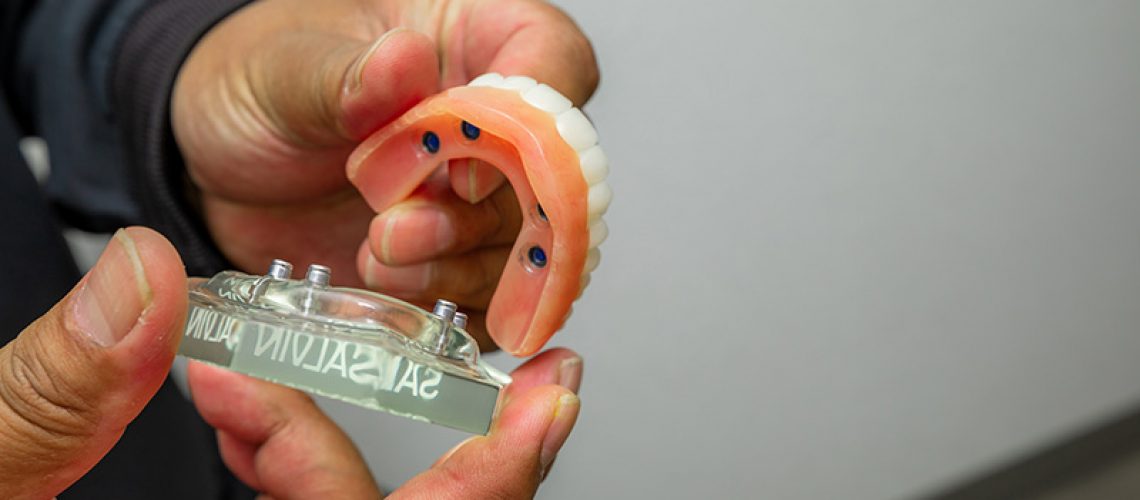
All-on-4 dental implants and traditional individual implants represent two distinct approaches to full-mouth restoration, each with specific mechanisms, timelines, and patient suitability criteria. Understanding these differences helps you produce an informed decision about your dental restoration needs in Colorado's western slope region.
Foundational distinction — what each option is
All-on-4 dental implants use four strategically placed titanium posts to support a complete arch of replacement teeth, with the back implants angled at 30-45 degrees to maximize bone contact and avoid anatomical structures like sinuses. This technique allows immediate placement of a temporary bridge, often within the same day as implant surgery. The angled placement distributes chewing forces across the entire arch while requiring less bone volume than traditional methods.
Traditional dental implants involve placing individual titanium posts for each missing tooth, typically requiring one implant per replacement tooth or using multiple implants to support bridges spanning several teeth. Each implant integrates independently with surrounding bone tissue over a 3-6 month healing period before receiving permanent crowns. This approach provides the most anatomically accurate replacement but requires sufficient bone density and volume at each implant site.
How All-on-4 works — streamlined full arch restoration
The All-on-4 system works by strategically positioning four implants per arch to create a stable foundation for 10-14 replacement teeth. For instance, the two front implants are placed vertically in areas with naturally denser bone, while the back implants are angled to engage longer sections of available bone and bypass anatomical limitations. This angled placement often eliminates the need for bone grafting procedures that traditional implants might require.
The immediate loading protocol allows patients to receive a temporary fixed bridge on the same day as implant placement, providing immediate function and aesthetics. During the 3-4 month healing period, patients can eat soft foods while the implants integrate with bone tissue. After complete healing, the temporary bridge is replaced with a permanent prosthetic crafted from durable materials like zirconia or porcelain-fused-to-metal.
How traditional implants work — individual tooth replacement
Traditional dental implants function as artificial tooth roots, with each titanium post surgically placed into the jawbone at the exact location of the missing tooth. The implant surface features microscopic texturing that encourages bone cells to grow directly onto the titanium through a process called osseointegration. For instance, this biological bonding creates a foundation as stable as natural tooth roots.
The treatment timeline typically spans 4-8 months, beginning with implant placement surgery followed by a healing period where temporary removable appliances may be necessary. After confirming complete integration through clinical examination and imaging, abutments are attached to connect the implants to custom-crafted crowns. Each crown is individually designed to match your natural tooth color, shape, and bite relationship.
Traditional implants require adequate bone width, height, and density at each placement site. When insufficient bone exists, additional procedures like bone grafting, sinus lifts, or ridge augmentation may be necessary, extending the overall treatment timeline but ensuring long-term stability and optimal aesthetics.
How to tell them apart — signs and presentation
The most obvious difference between these approaches lies in their scope and immediate presentation. All-on-4 treatments address complete arch restoration in patients missing most or all teeth in one or both jaws, while traditional implants typically replace individual teeth or small groups of missing teeth. The decision often depends on how many teeth you're missing and their distribution throughout your mouth.
Your bone structure and oral health status also influence which option suits your situation. Hence, all-on-4 candidates often have experienced significant bone loss from long-term tooth absence but still retain sufficient bone in the front and canine regions for implant stability. Traditional implant candidates generally have better overall bone preservation with localized areas of tooth loss.
Identifying All-on-4 candidacy — key signs and indicators
You might be an All-on-4 candidate if you're missing most teeth in one or both arches, currently wear dentures that feel loose or uncomfortable, or have been told you require extensive dental work including multiple extractions. This approach works well when you have moderate bone loss that makes individual implants challenging but sufficient bone remains in the front jaw regions. All-on-4 also suits patients who prefer a faster treatment timeline and want to avoid multiple surgical procedures.
Identifying traditional implant candidacy — key signs and indicators
Traditional implants work best when you're missing individual teeth or small groups of teeth with healthy natural teeth remaining in the same arch. You're likely a good candidate if you have adequate bone density and volume at the missing tooth sites, healthy gums, and superior overall oral hygiene habits. For instance, this approach is ideal when you want the most natural replacement option and have sufficient time for the extended treatment process.
Diagnosis and evaluation methods
Clinical assessment and oral examination
Your dentist begins by evaluating your remaining teeth, gum health, bite relationship, and overall oral condition. They assess how many teeth need extraction, examine your jaw movement and muscle function, and determine your aesthetic goals and functional needs. This examination includes checking for signs of gum disease, tooth decay, or other conditions that might affect implant success.
Advanced imaging and treatment planning
Cone beam computed tomography (CBCT) scans provide three-dimensional images showing bone density, volume, and anatomical structures like nerves and sinuses. This imaging allows precise measurement of available bone and identification of any limitations that might influence implant placement. Digital impressions and photographs facilitate create treatment simulations showing expected outcomes for both approaches, allowing you to visualize results before beginning treatment.
Immediate treatment protocols
Both implant approaches begin with comprehensive treatment planning and preparation, including addressing any existing dental infections, gum disease, or other oral health issues. Your surgical appointment includes local anesthesia or sedation options to ensure comfort throughout the procedure.
Surgical placement procedures
All-on-4 surgery typically takes 2-4 hours per arch and includes any necessary extractions, implant placement, and attachment of the temporary bridge. Traditional implant surgery varies based on the number of implants but generally takes 1-2 hours for single implant placement. Both procedures require post-surgical care including prescribed medications, dietary modifications, and specific oral hygiene protocols during the initial healing phase.
Post-surgical care and monitoring
Immediate post-surgical care includes managing swelling with cold therapy, taking prescribed antibiotics and pain medications as directed, and following a soft food diet. Your dentist schedules follow-up appointments to monitor healing, remove sutures, and ensure proper integration progress. Any complications like excessive bleeding, severe pain, or signs of infection require immediate professional attention.
Recovery and final restoration
Recovery timelines differ significantly between these approaches, with All-on-4 patients receiving immediate temporary teeth while traditional implant patients may use removable appliances during healing. Both treatments require careful attention to oral hygiene and regular monitoring throughout the integration period.
Healing and integration phases
All-on-4 patients experience a 3-4 month integration period while wearing their temporary bridge, gradually returning to normal eating habits as healing progresses. Indeed, traditional implant patients wait 3-6 months for complete integration before receiving permanent crowns, with longer timelines often needed in areas of softer bone. Both approaches require regular check-ups to confirm successful integration before proceeding to final restorations.
Permanent restoration placement
Final All-on-4 bridges are custom-crafted using impressions taken after complete healing, designed for optimal aesthetics and function with materials chosen for durability and appearance. Traditional implant crowns are individually crafted to match surrounding natural teeth in color, shape, and size. Both restoration types require precise fitting and bite adjustment to ensure comfort and proper function.
Prevention and long-term maintenance
Long-term success for both implant types depends on excellent oral hygiene, regular professional maintenance, and protecting your investment through proper care habits. All-on-4 restorations require cleaning under the bridge using special floss or water flossers, while traditional implant crowns are maintained similarly to natural teeth with regular brushing and flossing.
Both approaches benefit from regular dental check-ups every 3-6 months, professional cleanings, and periodic imaging to monitor bone levels around implants. Avoiding harmful habits like teeth grinding, chewing ice, or using teeth as tools helps prevent complications and extends the lifespan of your restoration.
Daily care routines
All-on-4 patients need to clean thoroughly around and under their bridge using interdental brushes, water flossers, or specialized floss threaders to prevent bacteria accumulation and maintain gum health. Traditional implant patients follow standard brushing and flossing techniques with extra attention to the implant-crown junction where bacteria can accumulate. Both require antimicrobial mouth rinse and may benefit from prescription fluoride products.
Professional maintenance and monitoring
Regular professional cleanings use specialized instruments safe for implant surfaces, avoiding damage to the titanium or restoration materials. Your dental team monitors for signs of peri-implantitis (inflammation around implants), checks the stability of restorations, and addresses any issues before they become serious problems. Periodic imaging helps detect any bone loss or other changes requiring intervention.
Summing up
As a reminder, All-on-4 dental implants offer a faster path to full arch restoration using four strategically placed implants per arch with immediate temporary teeth, while traditional implants provide individual tooth replacement with longer treatment timelines but more natural anatomical restoration. Your choice depends on factors including the number of missing teeth, bone availability, timeline preferences, and budget considerations. Consulting with an experienced implant dentist helps determine which approach best meets your specific needs and provides the most predictable long-term results for your situation.
Frequently asked questions
What are the primary differences between All-on-4 and traditional dental implants?
All-on-4 uses four implants to support an entire arch of 10-14 replacement teeth, with angled back implants to maximize bone contact and often avoid bone grafting procedures. Traditional implants replace individual teeth or small groups using one implant per tooth or crown, requiring adequate bone at each specific location. All-on-4 provides immediate temporary teeth and faster completion (4-6 months total) while traditional implants take longer (6-12 months) but offer more precise individual tooth replacement. Cost differs significantly, with All-on-4 typically more economical for full arch restoration while traditional implants cost more per tooth but may be more affordable for replacing just a few teeth. The choice depends on how many teeth you're missing, your bone structure, timeline preferences, and budget considerations.
Can you have both All-on-4 and traditional implants at the same time?
Yes, it's possible to have All-on-4 in one arch and traditional implants in another, particularly when you have complete tooth loss in one jaw but only need individual tooth replacement in the opposite jaw. Some patients receive All-on-4 in the upper arch where bone loss is more common and traditional implants in the lower arch where bone preservation is typically better. The treatment can be coordinated to optimize healing and function, though timing may be adjusted to manage surgical stress and ensure proper healing. Your implant dentist will evaluate your specific situation, bone quality, and overall health to determine if combination treatment is appropriate. This approach allows you to benefit from the speed of All-on-4 where needed while preserving natural teeth and getting precise individual replacement where possible.
What are the main treatment and recovery differences between these options?
All-on-4 treatment typically requires one surgical appointment per arch with immediate temporary teeth, followed by a 3-4 month healing period before permanent bridge placement. Traditional implants involve separate appointments for each implant placement, a 3-6 month integration period without permanent teeth, then additional appointments for abutment placement and crown fabrication. Recovery from All-on-4 surgery affects a larger area but provides immediate function, while traditional implant recovery is more localized but may require temporary removable appliances. Dietary restrictions last longer with All-on-4 (soft foods for 6-8 weeks) compared to traditional implants where restrictions are typically 2-4 weeks per implant site. Pain and swelling are generally more significant initially with All-on-4 but resolve faster, while traditional implant discomfort is usually milder but may recur with each surgical phase.
When should you seek expert evaluation or escalate care?
Seek immediate professional attention if you experience severe pain not controlled by prescribed medications, excessive bleeding that doesn't stop with pressure, signs of infection including fever, facial swelling, or pus discharge from surgical sites. Contact your dentist if temporary teeth become loose, break, or cause persistent sore spots that don't improve within a few days of adjustments. Any numbness or tingling in lips, chin, or tongue lasting more than a few days requires prompt evaluation as it may indicate nerve involvement. Schedule urgent appointments for implant mobility, changes in bite that cause jaw pain, or persistent bad taste and odor despite proper oral hygiene. Regular warning signs include ongoing gum bleeding, food trapping that can't be cleaned, or gradual loosening of permanent restorations that may indicate complications requiring professional intervention before problems worsen.
What are typical recovery timelines and return-to-activity criteria?
All-on-4 patients can typically return to work within 3-5 days if their job doesn't involve heavy physical activity, with full normal activities resumed after 2-3 weeks once initial healing is complete. Traditional implant patients usually return to normal activities within 2-3 days for single implants, though multiple implants may require longer recovery similar to All-on-4. Dietary progression allows soft foods immediately after All-on-4 surgery, advancing to normal foods gradually over 8-12 weeks as healing progresses and permanent bridges are placed. Traditional implant patients can usually resume normal eating habits within 2-4 weeks, avoiding the implant area until integration is complete. Exercise restrictions include avoiding strenuous activity for one week after All-on-4 surgery and 3-5 days after traditional implant placement. Complete healing and final restoration placement typically occurs at 4-6 months for All-on-4 and 4-8 months for traditional implants, depending on bone quality and integration progress confirmed through clinical examination and imaging.